Hiển thị các bài đăng có nhãn Nature. Hiển thị tất cả bài đăng
An Australian company may have cracked this ticking time bomb of freshness with a machine that ‘switches off’ the enzyme responsible for discoloration


>>>>If you are unable to find the topic you are interested in please access here amazing facts of science to learn more
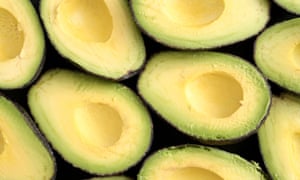
Avocado half-life: once cut, there is a narrow window of time before the fruit goes brown.

As anyone who has ever bought avocados will know, the ripeness window for the fruit is around 17 minutes. Before that, it’s solid and nutty. After, brown and mushy. So-called “ripe and ready” products are a lie. Once sliced or pulped, it’s a matter of seconds before smooth, fresh green flesh becomes musty and oxidized. 

To remove the guesswork from this pear-shaped ticking time bomb, an Australian company has developed an “avocado time machine”. The Natavo Zero is an enormous Bertha-esque contraption that slows down the browning process of the fruit without using chemicals. It does this by “switching off” the enzyme responsible for the browning (called polyphenol oxidase) using pressure fluctuations generated by steam. In doing this, the machine also eliminates disease-causing bugs.

The Natavo Zero, designed for pre-sliced or mashed avocado used in products like guacamole, can process about 4,000 avocados an hour. The end product then no longer needs additives, preservatives or processing aids to retain its green vibrancy. It also leads to less wastage and spoilage, meaning a higher yield for farmers and more avocados to have on the side of, well, everything. This is welcome news to anyone concerned about this year’s Great Avocado Shortage, which has fuelled a crime wave in New Zealand.

“By understanding the avocado’s lifecycle and the complex correlation of enzymes involved in the browning process, we have made it possible for the world to enjoy 100% natural, ready-to-eat avocado slices, dices, chunks or pulped products while retaining the flavour and fresh taste of avocado, without browning,” said Jeff Hastings, director of Naturo, the company that makes the Natavo Zero, in a statement.

It’s not the only system developed to keep tabs on avocado ripeness. California-based avocado distributor Calavo uses a contraption called ProRipe VIP that measures how ripe the fruits is by “listening” to it. The machine taps the side of the avocado and then uses sensors to measure the acoustic response – that is, the way the fruit vibrates. This indicates overall firmness and freshness and allows Calavo to determine the ripeness of the tricky-to-judge flesh.

Unfortunately for avocado aficionados, these technologies are only available at an industrial scale. You’ll have to make do with rubbing lemon juice on the exposed flesh or wrapping the fruit tightly with cling film. Or perhaps it’s time to accept that the avocado is overcado.

Fun Facts: If it is fun and interesting, it belongs here interesting animal facts!
Fun, interesting, amazing Chinchilla facts for kids: 

  • Chinchillas are crepuscular rodents.  Crepuscular meaning they are active during twilight hours.
  • · Amazing dog facts you may or may not know
  • Chinchillas live across the Andes Mountains of Peru and Chile.
  • They live in altitudes up to 15,000 ft above sea level.
  • They sleep in tiny holes in the sides of the mountains.
  • There are two different types of chinchillas: Long-tailed chinchillas called Lanigera Chinchillas and short-tailed chinchillas called Brevicaudata Chinchillas.
  • Chinchillas are a little bigger than squirrels.  Their bodies are 10-14 inches long and their tails are 5-6 inches long.
  • They weigh between 2-3 pounds.
  • Chinchilla’s have large round ears, busy tails, large eyes and long whiskers.
  • Even though their eyes are large, they cannot see very well.  Chinchilla’s  use their whiskers to help them see by feeling things around them.
  • · Fun Animal for Kids - Crazy, Cool, Funny, Amazing…
  • Chinchilla’s fur is very thick.  They have the thickest and softest fur of any land animal.
  • They grow 50-80 hairs per hair follicle, humans grow 2-3 hairs per follicle.
  • Their fur can be a variety of colors including sliver-grey, beige, black and white, tan and sapphire.
  • Chinchillas do not get fleas because their fur is so thick.
  • Their fur is also hypoallergenic.
  • Chinchilla’s will roll around in volcanic ash or dusk to free their fur of oils and moisture.
  • This is why chinchilla’s were hunted for their fur.
  • Chinchilla’s are now on the endangered species list and can no longer be hunted for their fur.
  • When a chinchilla is feeling threatened or being attacked, they will shed a large amount of hair.  This is called a fur-slip.
  • Predators to chinchilla’s are snakes, mountain lions and birds of prey.
  • Mother chinchillas give birth to 1-6 babies called kits.  They give birth twice a year.  Chinchilla’s are ready to mate when they are between 7-8 months old.
  • Chinchilla’s eat grasses, leaves, twigs, hay fruits, seeds and small insects.
  • They digest their food twice in a process called caecotrophy.  They poop then eat the small pellets.
  • Chinchilla’s are very social animals.
  • They live in groups called herds in colonies of up to 100 chinchillas.
  • Chinchillas communicate with each other by making grunting, chirping, squealing and barking sounds.
  • Chinchillas are sometimes kept as pets.
  • They make good pets but are very active and like a lot of attention and toys to play with.
  • Chinchilla’s teeth never stop growing.  It’s important that if they are kept as pets to give them something to chew on or they might start chewing on wires or things that are unsafe.
  • Chinchillas can overheat very quickly, they don’t respond well to temperatures over 80 degrees.
  • Chinchillas live between 10-12 years in the wild and 15-20 years in captivity.
  • If you are thinking of buying a chinchilla as a pet make sure you care for them properly and feed them the right diet.
Relate: ·         emperor penguin facts for kids – penguin facts and infomation


Do you think you know everything about our canine companions animals for kids? Think again! Check out these 10 surprising facts about dogs.

1. Your dog is as smart as a 2-year-old toddler.
There’s a reason your tot and your pup get along so well: they speak the same language. Or at least, they likely understand roughly the same number of words and gestures — 250!

2. Dogs and cats both slurp water the same way.
This may be hard to believe since dogs are such messy drinkers, but just like cats, our canine friends bend the tip of their tongue and raise liquid in a column up to their mouths.

3. Your dog does have a sense of time — and misses you when you’re gone.
If you think your dog knows when it’s time for dinner or a walk, you’re right! Dogs pick up on our routines and habits, and they also sense how much time has passed. One study showed how dogs responded differently to their owners being gone for different lengths of time.

4. Your dog’s whiskers help him “see” in the dark.
Okay, it’s not quite night-vision or a super power, but those whiskers pick up on even subtle changes in air currents, fact of life providing your pup with information about the size, shape, and speed of things nearby. This allows your dog to better sense approaching dangers or prey — even at night.

5. Dogs only have sweat glands in their paws.
More specifically, they are found between their paw pads. That’s why it can help to wet the bottom of their feet on a hot day, and it’s also why dogs rely on panting as a means of cooling down.

6. On average, a dog’s mouth exerts 320 pounds of pressure.
The tests were done on a German shepherd, American pit bull terrier, and Rottweiler. In comparison, human beings exert 120 pounds, white sharks exert 600 pounds, and crocodiles exert a whopping 2,500 pounds! Dogs also have ten more adult teeth than humans — 42 versus 32.

7. Your one year-old pup is as physically mature as a 15-year-old human.
Of course, different breeds age a little differently. Large dogs age faster than small ones. You can get a more exact comparison for your dog using this nifty Dog Age Calculator.

8. Your dog’s sense of smell is 1,000 to 10 million times better than yours.
Depending on the breed, your dog has between 125 million to 300 million scent glands — compared to only 5 million for humans. And the part of your dog’s brain that controls smell is 40 times larger than yours — that’s true, even though the canine brain is much smaller than the human, relative to size. A human’s brain is about 1/40th of their body weight while a dog’s brain is only 1/125th. Don’t feel too smug, though — an ant’s brain is 1/7th its body weight.

9. Dogs can hear 4 times as far as humans.
Puppies may be born deaf, but they quickly surpass our hearing abilities. Dogs can also hear higher pitched sounds, detecting a frequency range of 67 to 45,000 hertz (cycles per second). The human range is from 64 to 23,000 hertz. In both dogs and humans, the upper end of hearing range decreases with age

10. Your dog can smell your feelings.
Your pup can pick up on subtle changes in your scent, fun facts about dogs which can help him figure out how you are feeling — such as by smelling your perspiration when you become nervous or fearful. It’s also likely how dogs can detect certain diseases or know that a household member is pregnant.