Start your day with some of the most awesome Vaquita facts as below


The vaquita (Phocoena sinus), also known as the Gulf of California harbor porpoise, is the smallest and rarest of the cetaceans - which include whales, dolphins, and porpoises. The vaquita has a gray body with a pale gray or white belly and a dark patch around its eye. They are very rarely seen in the wild.
  1. The Vaquita, also known as ‘cochito’, ‘vaquita marina’ and ‘Gulf of California harbour porpoise’, exists in only one place in the world, the Gulf of California. That might be one of the most awesome animal facts you had no idea before.This narrow body of water is nestled between the second longest peninsula in the world, Baja California (translated from Spanish meaning ‘below’ or ‘south’ California) and the north west coast of mainland Mexico.
  2. Vaquita can be translated from Spanish to mean ‘little cow’.
  3. They are the rarest sea mammal in existence.
  4. Vaquitas are likened to porpoises and often confused with dolphins, but they are smaller, have a chunkier body and have a rounded head with no snout.
  5. They have a dark grey upper body which fades into a pale grey belly. They have striking faces with thick dark colouring around their eyes and on their lips giving the appearance they are wearing makeup.
  6. Their pectoral (chest) and dorsal (back) fins are distinctively larger than that of other porpoises.
  7. Female vaquitas up to 5ft (1.52m) are larger than males vaquitas that have been measured only up to 4.6ft (1.40m).
  8. Dolphins, whales and vaquitas are all in the same family known as cetaceans, which are large sea mammals characterised by their appearance, intelligence and carnivorous (meat eating) diets. They also need to come to the surface to breathe. Check out my list of fun, weird and just plain amazing fact of life I have found.
  9. The vaquita is the smallest cetacean on earth and is a cousin of the largest animal in the world, the blue whale.
  10. They feast on fish, prawns and crabs but are known to have particular preference for squid.
  11. Unlike dolphins that will follow boats, vaquitas are shy, private creatures and as such very little is known about them. In fact, these little sea creatures were not discovered until as late as 1958 when three vaquita skulls were discovered on a beach.
  12. Although they tend to spend their time in the shallow waters of the coast line or in the open sea no more than 25km (16 mi) from shore, they are so timid that it is very lucky spot a vaquita. The closest sighting has been from a far distance of 300ft [90m].
  13. Since they are elusive, not much is known about the social behaviour or the reproductive cycle of the vaquita. Sightings have reported small groups of 2-4, larger groups of up to 10 and even solitary vaquitas.
  14. Vaquitas can communicate with each other and navigate using sonar.
  15. Sadly, the vaquita is classified as critically endangered with less than 100 thought to survive.
  16. The fishing industry, pollution and habitat destruction from the dam built in the Colorado River threaten its survival. How much do you know about tiger facts for kids ?
  17. Illegal fishing for an exotic fish, the totoaba is the biggest threat to the Vaquita. The gillnets used frequently entangle and drown vaquitas.
  18. Last year in 2015, the Mexican Government banned the use of the gillnets for two years and many conservation efforts are underway which will hopefully save these timid beauties before they are lost to history.
We cant find any species have long neck than giraffe even the baby giraffe have long neck too. Some factoflife in my post will tell you about baby giraffe.
Baby giraffe facts for kids
No. 1 What is a baby giraffe called?
In agreement to cattle, a baby giraffe is called a calf. In addition, a female giraffe is a cow while a male is a bull.
No. 2 What is the size of a baby giraffe?
A calf is born weighing 100 to 150 pounds and measuring in at 6 feet tall.
No. 3 How do the Giraffe giving birth -and labor process?


Giraffe baby
Giraffes give birth while standing up so a calf enters the world from quite a height. They fall 6 feet to the ground with hoof and head first. The fall may seem like an abrupt entrance into the world, but it effectively breaks the amniotic sac, severs the umbilical cord, and most importantly encourages the calf to take its first breaths. After the calf drops to the ground, the mother will begin to clean it off, and after a few minutes, the calf will attempt its first steps.
No. 5 How soon can the baby walk after being born?
As mentioned in giraffe facts for kids, within 30 minutes to an hour of being born, a calf will begin to stand and walk. These first steps are necessary for the calf to be able to nurse from their mother. Within the first day, the calf will also be able to run.
No. 6 Where are giraffes give birth in the nature?
Giraffes choose to have their babies in places known as calving grounds. Something that's unique about these grounds is that mothers will often return to these lands time after time to give birth. Often, it is the same place they were born because a herd will continue the tradition of using the area for several generations.
No. 7 What is the food of baby giraffes?
A newborn giraffe will begin to nurse from its mother as soon as it is able to stand. By 4 months of age, they will begin to eat solid food (i.e. leaves in the nature).


Baby giraffe sleeping
No. 8 How do mother giraffes take care for her young?
In the immediate moments after birth, the mother will start to bond with her calf and lick it clean of the remaining amniotic fluids. She will also be seen encouraging the calf to stand and take its very first steps which will allow the young giraffe to nurse for the first time.
You can find somethings cool in my blog entertainment, nature, news,....

An amazing world of snake facts and info 

With more then 3,000 species of snakes in the world there is plenty to learn about them. Even though they all have many unique characteristics about them, there are quite a few similarities. Those are what lumps them all into the same type of category of living creature.


They are able to live in a wide spectrum of habitats. They can live in trees or in water. Many live on land and they also can burrow. All snakes are carnivores which means they eat other living things. Not all of them make venom though while people often think that they do. They all feature a tongue that is forked which allows them to pick up scent all around them. This might be one of the most amazing facts about animals ever seen
They all have many vertebrae and ribs that they use for movement. This helps them to get around since they don’t have any limbs. They also don’t have external ears or eyelids. They rely on vibration to help them find out what is around them. They also use what vision they have combined with smell to find out about dangers.

Most species of snakes aren’t aggressive at all but they have a terrible reputation about them being out to attack humans. They will usually retreat from any forms of danger that they may detect around them. However, if they start to feel like they are in trouble they will strike in order to protect themselves.

Studies do show that snake species are very intelligent. Many of them are able to put out bait as a way to get food sources for themselves to come along. This is a type of hunting skill that increases their chances of being able to feed. None of the species are able to consume solid foods by chewing. They have to liquefy it or they need to swallow the entire thing.

You will find information about snakes out there since the beginning of time. They are found in stories such as the Bible, books, legends of cultures, movies, and more. They are often kept as pets but many people don’t have the right means of properly caring for them. As a result the snakes often die in captivity. Take a look at our wide range of funny pictures, quotes and much more others.


The lifespan of any snake will depend on where it lives and the particular species. They feature a variety of color patterns which can make it hard to determine what type of snake you see. Many of them have colors that look quiet similar. For example some that are very timid and not harmful can resemble those that are aggressive and that have very powerful venom.

Snakes are cold blooded which is why they do need the warmer temperatures to help them survive. They do like to live in humid climates but some of them live in areas where it is dry such a the desert. They shed their skin which is called molting. This will occur many times over the span of their life.

Snakes are isolated creatures when it comes to their living behaviors. From time to time they will come into contact with each other by accident. Most of the time they will go their own way. However, it is mating season they may stick around. The males will fight each other so that they can find other females to mate with.

The females may or may not want to match. It is hard for experts to really understand what makes her choose a final mate. What is interesting is that some species of snakes have live young while the majority of them will lay eggs. They never stay with the young so that makes them extremely vulnerable.

You can also subcribe our factoflife if you want to find out more about animals and nature for kids.
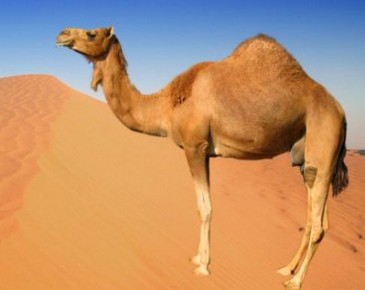
Here are top 15 best camel facts ever, just keep reading to know

  1. Camels’ humps are not used to store water. Even though they come from hot climates, their humps store fat and also help the rest of their bodies to stay cooler. When needed, the fat will be converted to food or water.
  2. The word ‘camel’ comes from an Arabic word: ǧml. This word is literally translated to mean beauty. Don’t ever try and say that camels are ugly! This is a fact of life that can blow your mind
  3. They need to stay hydrated in the desert, so it’s no surprise that camels can drink as much as 40 gallons of water at once. Considering it’s not being stored in their humps, that’s pretty amazing.
  4. Clara C released a song called ‘The Camel Song’. The song mentions ‘a desert full of camels’, but the main theme is love and not camels!
  5. Camels will not damage their mouths if they eat thorny twigs and other items which might cause injury to other animals. Enjoy the best collection of science facts on our site to widen your knowledge.
  6. There are more than 14 million camels in the world – most of them live in the Middle East, Asia and Australia.
  7. In Turkey, a camel wrestling event takes place every January. Camel wrestling dates back to the ancient world, so even though animal rights groups aren’t very happy with the sport, there are no signs of it stopping in the near future.
  8. Ever wondered why a camel’s mouth seems to be split into two? This helps them to graze and eat their food more effectively.
  9. The majority of mammals, including humans, only need to lose 15% of water before becoming dehydrated. However, camels are able to lose up to 25%, which means they can go much longer without water.
  10. In Middle Eastern countries, many people eat camel and consider it a delicacy. The hump is apparently the best part, and younger camels are tastier than the older animals.
  11. A camel’s nostrils are amazing. They retain water vapour which can be returned to the body when necessary, but they can also be closed if there is too much sand or wind blowing.
  12. David Baldacci created a group of characters known as The Camel Club. They featured in five novels, which are about the government and the secret service.
  13. Camels don’t just spit for fun. If they feel threatened, they will use it as a defence mechanism. Be nice to camels and they’ll be nice to you!
  14. They may not seem like fighters, but camels have been used during wars in the past. Ancient Greeks, Romans and Persians used to ride them, but they were used in the 20th century too.
  15. The grandfather of the prophet Mohammad almost sacrificed one of his sons to an Arabic god named Hubal. However, the god accepted 100 camels as an alternative sacrifice.
If you’re looking for the most interesting tiger facts for kids , you’re at the right place. Let’s check out now.
Here are facts about Dog discipline: things you should and shouldn't do and  interesting facts about dog discipline
  • Don't stare. Unless your gaze conveys deep affection, staring is perceived as confrontational and threatening. Don't confuse your dog. He'll learn to fear or challenge you.
  • Don't chase. Imagine rushing onto another person in the same manner. This technique induces fear or confrontation, not understanding. It's ineffective in communicating anything, except perhaps that you've lost your mind.
  • Don't grab, drag, or hold. When you grab, hold, or drag a dog, his only option is to defend himself. Though you may contain him in the moment or vent frustration, it will lead to out of control behavior.


Dog Discipline Do and Don'ts
  • Do stay calm, setting the example to model. You should be the one setting an example of how to act in all situations. Give your dog a good example to follow.
  • Do direct your dog. Your dog can't read your mind. Teach your dog basic commands, such as to stay, follow your lead, and come.
  • Do provide alternatives. Give your dog every opportunity to behave well. Provide ample activities to occupy his energy and curiosity. When you discourage one activity (such as jumping), encourage something else, such as fetching a toy or sitting.
  • Provide your dog ample activities to occupy his energy and curiosity
In order to communicate and teach your dog well, you should learn some methods that might make them better manner. Don't forget to show your love and make your dog feel warmer. It always works on having him obey you completely.

How about mystery of interesting science facts? Check to get it now
Fact of life: making the decision to put down a pet is really difficult, but there are some reasons that force you to give the decision as follows:

Reason you may have to make this difficult decision?
These include:
  • Rabies
  • Parvovirus
  • Distemper
  • Cancer
  • Accidents
  • Old Age (related conditions)
  • Genetic diseases (related conditions)
It should be noted that with rabies there really is no other decision to make. Other than euthanasia as the death of your pet is unavoidable.

Image result for when does a dog sleep

Should I put my dog down? For more: tiger facts

It’s the decision no one ever wants to make, but if your dog’s quality of life is suffering with no sign of getting better, you may find the kindest option is to put your dog to sleep. It’s a very hard choice; on the one hand you want to spend as long as possible with your friend but, on the other hand, you want to make the right decision for them.

You will normally have a bit of time to think things through, and we always recommend you talk to family and friends and consult your vet as part of the process. Whilst you and your family will be able to tell if your dog is acting out of character or seems to be struggling, your vet will have a good insight into how this will affect their quality of life. Consider your pet’s mobility, appetite, breathing, comfort, toileting habits, mental capacity, happiness and response to treatment. If you notice any of these failing, then seek further advice from your vet.

Ultimately, the decision to put your dog to sleep will be yours, but remember that sometimes the kindest and most responsible decision is to let them go, especially if they will suffer if they keep going.

Deciding to put your dog to sleep is hard for the whole family, especially children. If you can, try to sit down as a family and discuss the decision together, being honest about your reasons and what it will mean for everyone, including your beloved pet. Of course, it will be an upsetting conversation, and there may be tears, but try to focus on it being about what’s best for your dog – after all, you all want to do the right thing for them.

An Australian company may have cracked this ticking time bomb of freshness with a machine that ‘switches off’ the enzyme responsible for discoloration


>>>>If you are unable to find the topic you are interested in please access here amazing facts of science to learn more
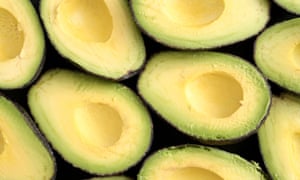
Avocado half-life: once cut, there is a narrow window of time before the fruit goes brown.

As anyone who has ever bought avocados will know, the ripeness window for the fruit is around 17 minutes. Before that, it’s solid and nutty. After, brown and mushy. So-called “ripe and ready” products are a lie. Once sliced or pulped, it’s a matter of seconds before smooth, fresh green flesh becomes musty and oxidized. 

To remove the guesswork from this pear-shaped ticking time bomb, an Australian company has developed an “avocado time machine”. The Natavo Zero is an enormous Bertha-esque contraption that slows down the browning process of the fruit without using chemicals. It does this by “switching off” the enzyme responsible for the browning (called polyphenol oxidase) using pressure fluctuations generated by steam. In doing this, the machine also eliminates disease-causing bugs.

The Natavo Zero, designed for pre-sliced or mashed avocado used in products like guacamole, can process about 4,000 avocados an hour. The end product then no longer needs additives, preservatives or processing aids to retain its green vibrancy. It also leads to less wastage and spoilage, meaning a higher yield for farmers and more avocados to have on the side of, well, everything. This is welcome news to anyone concerned about this year’s Great Avocado Shortage, which has fuelled a crime wave in New Zealand.

“By understanding the avocado’s lifecycle and the complex correlation of enzymes involved in the browning process, we have made it possible for the world to enjoy 100% natural, ready-to-eat avocado slices, dices, chunks or pulped products while retaining the flavour and fresh taste of avocado, without browning,” said Jeff Hastings, director of Naturo, the company that makes the Natavo Zero, in a statement.

It’s not the only system developed to keep tabs on avocado ripeness. California-based avocado distributor Calavo uses a contraption called ProRipe VIP that measures how ripe the fruits is by “listening” to it. The machine taps the side of the avocado and then uses sensors to measure the acoustic response – that is, the way the fruit vibrates. This indicates overall firmness and freshness and allows Calavo to determine the ripeness of the tricky-to-judge flesh.

Unfortunately for avocado aficionados, these technologies are only available at an industrial scale. You’ll have to make do with rubbing lemon juice on the exposed flesh or wrapping the fruit tightly with cling film. Or perhaps it’s time to accept that the avocado is overcado.

Fun Facts: If it is fun and interesting, it belongs here interesting animal facts!

Pop diva Ariana Grande found herself in a hole after a doughnut-licking incident seems to have cost her a gig at the White House, last week’s DNC email dump revealed.
  • If you are unable to find the topic you are interested in please access here amazing science facts to learn more
One leaked email exchange concerned whether to allow Grande to perform at a presidential gala last year a few months after TMZ posted the infamous video showing the singer at a bakery in California licking doughnuts on the shop's counter.

The emails also show officials were worried about the singer’s “I hate America” comment in the same video.

Grande, whose real name is Ariana Butera, issued apologies in response to the video.

In a chain of emails posted Friday by WikiLeaks, an official asks for Grande to be vetted for the “performance for POTUS.”

A DNC staffer summarized the case against her in the email chain, according to the Cox Media Group.

“Ariana Butera-video caught her licking other peoples' doughnuts while saying she hates America. Republican congressman used this video and said it was a double standard that liberals were not upset with her like they are with Trump who criticized Mexicans,” he says.

Grande was seen in the video licking a tray of large doughnuts after they are brought out and then saying, “I hate Americans. I hate America. That’s disgusting.”

A White House staffer issued a terse reply to the performance request: “Nope, sorry.”

SEOUL, South Korea – An advanced U.S. missile defense system will be deployed in a rural farming town in southeastern South Korea, Seoul officials announced Wednesday, angering not only North Korea and China but also local residents who fear potential health hazards that they believe the U.S. system might cause, according review journal

As words of the location for the Terminal High-Altitude Area Defense, or THAAD, spread even before the government's formal announcement, thousands of residents in the town of Seongju, the site for the U.S. system, rallied and demanded the government cancel its decision. A group of local leaders wrote letters of complaint in blood that they plan to give to the Defense Ministry.

"We oppose with our lives the THAAD deployment," one of the letters said, according to Seongju local council speaker Bae Jae Man, one of the 10 people who wrote the letter.

Seoul and Washington officials say they need the missile system to better deal with what they call increasing North Korean military threats. On Monday, North Korea warned it will take unspecified "physical" measures once the location for THAAD is announced.

Seoul's Deputy Defense Minister Ryu Je Seung told a news conference that Seongju was picked because it can maximize the THAAD's military effectiveness while satisfying environmental, health and safety standards.

Ryu said a THAAD system stationed in Seongju would cover two-thirds of South Korea's territory from possible North Korean nuclear and missile threats. He said the defense chiefs of the countries approved the decision.

China and Russia oppose the system that they believe helps U.S. radar track missiles in their countries. Seoul and Washington say the system targets only North Korea. Many South Koreans worry China, South Korea's biggest trading partner, might take economic retaliatory measures.

Residents in Seongju and several other villages previously rumored to be candidate sites for the THAAD system have already launched protests, citing fears that the electromagnetic waves that THAAD radar systems emit can possibly cause health problems.

Defense officials have disputed that, saying the system will be located on a mountain, not in a residential area, and is harmless if people stay at least 100 meters (yards) away from it.

Seoul and Washington launched talks on the THAAD deployment after North Korea conducted a fourth nuclear test and carried about a long-range rocket launch earlier this year.

The United States stations about 28,500 troops in South Korea as deterrence against potential aggression from North Korea. China assisted North Korea during the 1950-53 Korean War, while American-led U.N. troops fought alongside South Korea.
Just for fun you can check out cool animal facts
Fun, interesting, amazing Chinchilla facts for kids: 

  • Chinchillas are crepuscular rodents.  Crepuscular meaning they are active during twilight hours.
  • · Amazing dog facts you may or may not know
  • Chinchillas live across the Andes Mountains of Peru and Chile.
  • They live in altitudes up to 15,000 ft above sea level.
  • They sleep in tiny holes in the sides of the mountains.
  • There are two different types of chinchillas: Long-tailed chinchillas called Lanigera Chinchillas and short-tailed chinchillas called Brevicaudata Chinchillas.
  • Chinchillas are a little bigger than squirrels.  Their bodies are 10-14 inches long and their tails are 5-6 inches long.
  • They weigh between 2-3 pounds.
  • Chinchilla’s have large round ears, busy tails, large eyes and long whiskers.
  • Even though their eyes are large, they cannot see very well.  Chinchilla’s  use their whiskers to help them see by feeling things around them.
  • · Fun Animal for Kids - Crazy, Cool, Funny, Amazing…
  • Chinchilla’s fur is very thick.  They have the thickest and softest fur of any land animal.
  • They grow 50-80 hairs per hair follicle, humans grow 2-3 hairs per follicle.
  • Their fur can be a variety of colors including sliver-grey, beige, black and white, tan and sapphire.
  • Chinchillas do not get fleas because their fur is so thick.
  • Their fur is also hypoallergenic.
  • Chinchilla’s will roll around in volcanic ash or dusk to free their fur of oils and moisture.
  • This is why chinchilla’s were hunted for their fur.
  • Chinchilla’s are now on the endangered species list and can no longer be hunted for their fur.
  • When a chinchilla is feeling threatened or being attacked, they will shed a large amount of hair.  This is called a fur-slip.
  • Predators to chinchilla’s are snakes, mountain lions and birds of prey.
  • Mother chinchillas give birth to 1-6 babies called kits.  They give birth twice a year.  Chinchilla’s are ready to mate when they are between 7-8 months old.
  • Chinchilla’s eat grasses, leaves, twigs, hay fruits, seeds and small insects.
  • They digest their food twice in a process called caecotrophy.  They poop then eat the small pellets.
  • Chinchilla’s are very social animals.
  • They live in groups called herds in colonies of up to 100 chinchillas.
  • Chinchillas communicate with each other by making grunting, chirping, squealing and barking sounds.
  • Chinchillas are sometimes kept as pets.
  • They make good pets but are very active and like a lot of attention and toys to play with.
  • Chinchilla’s teeth never stop growing.  It’s important that if they are kept as pets to give them something to chew on or they might start chewing on wires or things that are unsafe.
  • Chinchillas can overheat very quickly, they don’t respond well to temperatures over 80 degrees.
  • Chinchillas live between 10-12 years in the wild and 15-20 years in captivity.
  • If you are thinking of buying a chinchilla as a pet make sure you care for them properly and feed them the right diet.
Relate: ·         emperor penguin facts for kids – penguin facts and infomation


Amazing facts of science, Apple will finally drop the 16 GB iPhone in the upcoming iPhone 7, ending claims that it is selling phones with insufficient capacity but potentially raising the price in the process, according to numerous reports. 

Confirmed by the Wall Street Journal, the size upgrade was first leaked by Kevin Wang, an IHS technology analyst who claims links in Apple’s supply chain. Wang said the new phone, expected to be released in September, would come with 32 GB as its minimum storage. 

The company has launched its flagship models with a minimum of 16 GB storage since 2011’s iPhone 4s, although a later version of the phone and the iPhone 5c both had 8 GB options. But as apps, photos and videos get bigger, many people have complained that the 16 GB capacity is not enough.

Apple does offer iPhones with 64 GB and 128 GB capacities, but the entry-level option is significantly cheaper, making it a popular choice. The current crop of iPhones feature vastly improved cameras and shoot 4K video, making it easy to fill up storage.

The iPhone 7 review journal is set to be a relatively minor upgrade on the 6s, looking largely the same, although leaked images suggest the camera is set for a major upgrade, at least on the bigger “Plus” model.

Apple has also been rumoured to be getting rid of the headphone jack, encouraging owners to use headphones connected to the charging port.

The company is expected to save any major changes until next year’s iPhone, possibly called the iPhone 8, which will feature an all-glass body and possibly wireless charging.

The iPhone 7 approaches its release as Apple struggles with anunprecedented decline in iPhone sales. In April, Apple said revenue had fallen for the first time in 13 years, while quarterly iPhone sales fell from 61 million to 51 million. The company is forecasting another fall in the current quarter.

Wang, writing on Chinese social media, also claimed that the iPhone’s RAM will remain at 2GB, 9to5Mac reported. 
Everything you could possibly want to know about new games coming out 

BlackBerry will no longer manufacture the BlackBerry Classic, a beloved, updated model of the original that made the company a smartphone leader before Apple and Samsung dethroned it.
Check out Games review to see more great reviews about BlackBerry  


Chief Executive Officer John Chen introduced the Classic after joining the company in 2013, bringing back the raised- button keyboard that BlackBerry enthusiasts loved, and which his predecessor, Thorsten Heins, let fall by the wayside with his push to full touch-screen devices. 

The decision to end production of the Classic is one step further toward eliminating the BB10 operating system, which will now only be running on the Passport model, in a pivot to newer phones running on the Android platform.

Chen is also increasingly focused on software as revenue from handsets has declined over the past two years.

In the latest fiscal quarter, BlackBerry sold 500,000 devices, compared with 600,000 in the previous quarter.

"The Classic has long surpassed the average lifespan for a smartphone in today’s market,” Ralph Pini, general manager for devices and chief operating officer, said. "We are ready for this change so we can give our customers something better."

The company is working on two more Android phones, in addition to its introductory model, the Priv, including a cheaper option. Still, analysts have called on Chen to cut losses in handsets and get out of the hardware business so it will stop being a drag on revenue.


Chen has insisted that the hardware unit will reach profitability by September, but also said the "Number one goal" at the company is to ramp software and services.
Subscribe for the latest gaming news and the latest review journal


"The company is under a lot of pressure and odds are good BlackBerry will have to sell or shut down the [hardware] segment," said Desmond Lau, an analyst at Veritas.

BlackBerry is still on track to deliver the next version of its BB10 software next month with a second update to follow in 2017, according to the memo.

One of the biggest group of Blackberry fans over the years has been government workers, due to the phone’s reputation for security and its finger-friendly keyboard. Now it seems even Senators will have to give them up.


An e-mail to Senate staffers last week said that once the company depleted its current stock of about 600 BlackBerry phones, there would be no more more BlackBerrys issued, except in the case of warranty exchanges. For more information you can click here amazing science facts
Hillary Clinton will campaign with a familiar figure today as President Obama joins her on the trail.


President Obama endorsed Clinton on June 9, but their initial joint campaign appearance was rescheduled in the wake of the Orlando nightclub attack.

Now the pair will hit the trail together today in Charlotte, North Carolina.

Related content: reviews Obama Expected to Highlight His Relationship With Clinton on Campaign Trail Next Week

The duo will "discuss building on the progress we've made and their vision for an America that is stronger together," a campaign press release stated.

The campaign appearance comes at a critical time for Clinton following what her spokesman Nick Merrill described as a "voluntary" interview with the FBI over her use of a private email server during her time as Secretary of State.

According to the latest Washington Post poll, released June 26, fifty-six percent of respondents disapprove of the way she is handling questions over her use of the private server.

Obama's appearance and the president's relatively high approval ratings could help those numbers.

That same Washington Post poll reported that 56 percent of overall respondents approved of the president's job performance. The approval rating for Obama goes up dramatically among Democrats -- to 88 percent, dips to 50 percent among independents, and plunges to 18 percent among Republicans.
Subscribe for the latest gaming news and the latest video game reviews

Reviews, the world is quietly being reshaped by machine learning. We no longer need to teach computers how to perform complex tasks like image recognition or text translation: instead, we build systems that let them learn how to do it themselves.


“It’s not magic,” says Greg Corrado, a senior research scientist at Google. “It’s just a tool. But it’s a really important tool.”

The most powerful form of machine learning being used today, called “deep learning”, builds a complex mathematical structure called a neural network based on vast quantities of data. Designed to be analogous to how a human brain works, neural networks themselves were first described in the 1930s. But it’s only in the last three or four years that computers have become powerful enough to use them effectively.

Corrado says he thinks it is as big a change for tech as the internet was. “Before internet technologies, if you worked in computer science, networking was some weird thing that weirdos did. And now everyone, regardless of whether they’re an engineer or a software developer or a product designer or a CEO understands how internet connectivity shapes their product, shapes the market, what they could possibly build.”

He says that same kind of transformation is going to happen with machine learning. “It ends up being something that everybody can do a little of. They don’t have to do the detailed things, but they need to understand ‘well, wait a minute, maybe we could do this if we had data to learn from.’”

Google’s own implementation of the idea, an open-source software suite called TensorFlow, was built from the ground up to be useable by both the researchers at the company attempting to understand the powerful models they create, as well as the engineers who are already taking them, bottling them up, and using them to categorise photos or let people search with their voice.


Machine learning is still a complex beast. Away from simplified playgrounds, there’s not much you can do with neural networks yourself unless you have a strong background in coding. But I wanted to put Conrado’s claims to the test: if machine learning will be something “everybody can do a little of” in the future, how close is it to that today? You can check out fact of life to learn more

One of the nice things about the machine learning community right now is how open it is to sharing ideas and research. When Google made TensorFlow open to anyone to use, it wrote: “By sharing what we believe to be one of the best machine learning toolboxes in the world, we hope to create an open standard for exchanging research ideas and putting machine learning in products”. And it’s not alone in that: every major machine learning implementation is available for free to use and modify, meaning it’s possible to set up a simple machine intelligence with nothing more than a laptop and a web connection.

Which is what I did.

Following the lead of writer and technologist Robin Sloan, I trained a simple neural network on 119mb of Guardian leader columns. It wasn’t easy. Even with a detailed readme, it took me a few hours to set up a computer to the point where it could start learning from the corpus of text. And once it reached that point, I realised I had vastly underrated the amount of time it takes for a machine to learn. After running the training software for 30 minutes, and getting around 1% of the way through, I realised I would need a much faster computer.

So I spent another few hours configuring a server on Amazon’s cloud to do the learning for me. It cost $.70 an hour, but meant that the whole thing was done in about 8 hours.

I’m not the only one to play around with the technology. Quietly, starting a few years ago, Google itself has undergone a metamorphosis. The search giant has torn out the guts of some of its biggest services, from image search to voice recognition, and recreated them from the ground up. Now, it wants the rest of the world to follow suit.

On 16 June, it announced that it was opening a dedicated Machine Learning group in its Zurich engineering office, the largest collection of Google developers outside of the US, to lead research into three areas: machine intelligence, natural language processing, and machine perception. That is, building systems that can think, listen, and see.

But while computer scientists know enough about how to wrangle neural networks to use them to identify speech or create psychedelic images, they don’t really know all there is to know about how they actually work. They sort of just … do. Part of the job of Google DeepMind, the research arm which most famously led an algorithm to victory over a world champion in the ancient Asian board game Go, is to work out a little bit more about why and how they are so good. And the new machine learning group is straddling the line between research and product development, attempting to build new algorithms that can tackle unprecedented challenges.

My own attempt to do the same didn’t go so well. The results were … not perfect. While Google’s machine learning demonstrations involve solving problems which were described as “virtually impossible” just two years ago, mine could barely string a sentence together.

Following Sloan’s example, I set my model up to run as an autocomplete engine. I could write the first half-sentance of a theoretical Guardian editorial, and the system gets fed it as an input and asked what it thinks will come next. Don’t like that? Ask it for another response.

I tried to use it to read Guardian editorials from a parallel universe. I used “Thursday’s momentous vote to stay in the EU was” as the seed, and tried to get the system to imagine what the rest of the sentence would look like:
  • Thursday’s momentous vote to stay in the EU was more contracts in the 1970s.
  • Thursday’s momentous vote to stay in the EU was a man of a legal opposition in 2015.
  • Thursday’s momentous vote to stay in the EU was the discrimination and the first way the failure to declare the government is not a single constitutional conservative policy.
  • Thursday’s momentous vote to stay in the EU was on the promise of the pronouncements.

It’s terrible. Of course it’s terrible: if I could train a machine to write a convincing Guardian editorial, or even a convincing sentence extract from a Guardian editorial, in two days by copying a readme and fiddling around with complex software which I don’t really understand even after having successfully used it, then my job would be much less secure than it is. Hell, everyone’s jobs would be much less secure than they are.

I’m not even the first to fall at this hurdle: the Atlantic’s Adrienne LaFrance tried a similar experiment, also using Sloan’s kit, earlier in June, but was hampered by the size of her corpus. Half a million words, the total quantity of her writing from the Atlantic, isn’t quite enough for a machine to learn from, but the 20m sitting in the Guardian’s archive of editorials is better. (I could have run the system on every story in the archive, but it learns better if there’s a consistent tone and style for it to emulate – something leader columns, which are all written in the voice of the paper, have).

While the results are unimpressive on the face of it, at the same time, however, they’re … kind of amazing. The specific package I used, called Torch-rnn, is designed for training character-level neural networks. That is, before it’s trained, it doesn’t even know the concept of a word, let alone have a specific vocabulary or understanding of English grammar.

Now, I have a model that knows all those things. And it taught itself with nothing more than a huge quantity of Guardian editorials.

It still can’t actually create meaning. That makes sense: a Guardian editorial has meaning in relation to the real world, not as a collection of words existing in its own right. And so to properly train a neural network to write one, you’d also have to feed in information about the world, and then you’ve got less of a weekend project and more of a startup pitch.
Related: animals for kids on Google 

So it’s not surprising to see the number of startup pitches that do involve “deep learning” skyrocket. My inbox has consistently seen one or two a day for the past year, from an “online personal styling service” which uses deep learning to match people to clothes, to a “knowledge discovery engine” which aims to beat Google at its own game.

Where the archetypal startup of 2008 was “x but on a phone” and the startup of 2014 was “uber but for x”, this year is the year of “doing x with machine learning”. And Google seems happy to be leading the way, not only with its own products, but also by making the tools which the rest of the ecosystem is relying on.

But why now? Corrado has an answer. “The maths for deep learning was done in the 1980s and 1990s… but until now, computers were too slow for us to understand that the math worked well.

“The fact that they’re getting faster and cheaper is part of what’s making this possible.” Right now, he says, doing machine learning yourself is like trying to go online by manually coding a TCP/IP stack.

But that’s going to change. It will get quicker, easier and more effective, and slowly move from something the engineers know about, to something the whole development team know about, then the whole tech industry, and then, eventually, everyone. And when it does, it’s going to change a lot else with it.
See more at here: video game reviews


Do you think you know everything about our canine companions animals for kids? Think again! Check out these 10 surprising facts about dogs.

1. Your dog is as smart as a 2-year-old toddler.
There’s a reason your tot and your pup get along so well: they speak the same language. Or at least, they likely understand roughly the same number of words and gestures — 250!

2. Dogs and cats both slurp water the same way.
This may be hard to believe since dogs are such messy drinkers, but just like cats, our canine friends bend the tip of their tongue and raise liquid in a column up to their mouths.

3. Your dog does have a sense of time — and misses you when you’re gone.
If you think your dog knows when it’s time for dinner or a walk, you’re right! Dogs pick up on our routines and habits, and they also sense how much time has passed. One study showed how dogs responded differently to their owners being gone for different lengths of time.

4. Your dog’s whiskers help him “see” in the dark.
Okay, it’s not quite night-vision or a super power, but those whiskers pick up on even subtle changes in air currents, fact of life providing your pup with information about the size, shape, and speed of things nearby. This allows your dog to better sense approaching dangers or prey — even at night.

5. Dogs only have sweat glands in their paws.
More specifically, they are found between their paw pads. That’s why it can help to wet the bottom of their feet on a hot day, and it’s also why dogs rely on panting as a means of cooling down.

6. On average, a dog’s mouth exerts 320 pounds of pressure.
The tests were done on a German shepherd, American pit bull terrier, and Rottweiler. In comparison, human beings exert 120 pounds, white sharks exert 600 pounds, and crocodiles exert a whopping 2,500 pounds! Dogs also have ten more adult teeth than humans — 42 versus 32.

7. Your one year-old pup is as physically mature as a 15-year-old human.
Of course, different breeds age a little differently. Large dogs age faster than small ones. You can get a more exact comparison for your dog using this nifty Dog Age Calculator.

8. Your dog’s sense of smell is 1,000 to 10 million times better than yours.
Depending on the breed, your dog has between 125 million to 300 million scent glands — compared to only 5 million for humans. And the part of your dog’s brain that controls smell is 40 times larger than yours — that’s true, even though the canine brain is much smaller than the human, relative to size. A human’s brain is about 1/40th of their body weight while a dog’s brain is only 1/125th. Don’t feel too smug, though — an ant’s brain is 1/7th its body weight.

9. Dogs can hear 4 times as far as humans.
Puppies may be born deaf, but they quickly surpass our hearing abilities. Dogs can also hear higher pitched sounds, detecting a frequency range of 67 to 45,000 hertz (cycles per second). The human range is from 64 to 23,000 hertz. In both dogs and humans, the upper end of hearing range decreases with age

10. Your dog can smell your feelings.
Your pup can pick up on subtle changes in your scent, fun facts about dogs which can help him figure out how you are feeling — such as by smelling your perspiration when you become nervous or fearful. It’s also likely how dogs can detect certain diseases or know that a household member is pregnant.


Fact of life, Is there a more unfashionable meal than the carvery? 1970s laughing stocks such as Arctic roll and chicken Kiev have been reinvented by chefs and rediscovered by food lovers, but the carvery resists any warm glow of nostalgia. It remains the butt of a joke, a restaurant experience that, in the way it seems to encapsulate the narrowness of small-town British life, has become a bleakly comic trope. Adrian Mole has found himself at Ye Olde Carvery in Frisby-on-the-Wreake confronted by “ye olde foode congealing behind the bar”. Under hypnosis, Alan Partridge fantasised about whisking Ursula Andress away to High Wycombe’s Moat House Hotel: “You’ll love it. It’s got a 24-hour carvery.”

We all know why the carvery’s reputation is languishing in this way. Carveries are everywhere in Britain – the all-you-can-eat £6.99 roast is a staple of the British high street – but, ever since the then catering giant Lyons first introduced a carvery at its Regent Palace Hotel in the 50s, this has been a race to the bottom. A revolutionary self-service meal, the carvery was always more about cutting staff costs than delivering pleasure. Subsequently, pubs across the country have energetically worked that bottom line with cheap meats and sloppy cooking. Think carvery and the image that comes to mind is one of overcooked joints left to dry out under hot lamps alongside soggy veg, cold, greasy roast potatoes and Yorkshires as lifeless as Egyptian papyrus. And possibly a few years older.

Which is all a bit sad. Or certainly a missed opportunity. Who would not like the idea of being able to stuff yourself (unless you’re banned for eating too much) on every potential element of a Sunday roast, mixing and matching meats with abandon, even if it is just turkey, gammon and beef? Plus, there is nothing inherently flawed about such catering. Carveries are often bad because the core ingredients are poor, and then everything is (over)cooked in advance for convenience. But with a little more thought and care it would be easy to produce a superior carvery: occasionally, you do hear of pubs trying to ramp up standards.
There are couple of Les Routiers-approved pubs in the Midlands that cook their carvery joints in (ooooh, get them!) an Aga and, curiously, the south-west and Cornwall particularly seems to be a bit of a hotbed of next-level carvery action. The Norway Inn in Truro serves local venison, while the Lanhydrock Hotel offers a choice of five meats, including Cornish pork and lamb alongside “imaginatively” cooked vegetables.

However, the most ambitious attempt to redefine our perception of the carvery (and its cousin, the hog roast) will occur in July, when Carve opens in central London. A fast-food operation attempting to tap into our interest in high-protein diets, it will serve a choice of “impeccably sourced”, freshly carved meats in £6.95 “carvepots”. Meats such as roasted bacon, eight-hour cooked salt beef and smoked pork leg will be sliced over healthy salads and slaws. Combinations will include jerk-roasted turkey with coconut rice, black-eyed peas and Scotch bonnet relish or short-horn beef with roast cherry tomatoes, spelt, parsley and capers. Those will initially be served as set meals, but the long-term plan is to allow customers to mix ‘n’ match meats and sides. Founder Daniel Bear says:

"We can tell you the postcode of each and every joint, its husbandry, what it was fed on. Another point of difference is our insistence on sous-videing first, and other slow-roasting techniques which I’ve worked on with the chef, Mark Broadbent. It’s all going to be served very quickly, too. At lunch, we can serve up to 800 customers, so it’s all about speed. We’ll be roasting off the meats and as soon as they come out of the oven our guys will be carving them. The speed we’ll be going through them means they won’t have that chance to dry out on a hotplate. And there aren’t any roast potatoes or big, dry Yorkshire puddings. It’s all about superfood bases, top-quality meat and, hopefully, propelling British carvery into the 21st century."

So forward-thinking is Carve that this carvery will even be serving tofu. Would you love to see carvery revitalised? And where can we already get a great one?

Reviews, don’t worry, Mark Zuckerberg: Just because you’re paranoid doesn’t mean they aren’t after you. And as the richest millennial in the world, you can probably be confident that someone, somewhere, is after you.

Which is why it makes perfect sense that you’ve joined the growing number of people doing a little DIY hardware hacking, and disabling their computer’s webcam and microphone. Even if a sneaky hacker does manage to penetrate your security, they’re not going to be seeing you in your tighty whities.

Yes folks, Zuckerberg tapes over his webcam. The billionaire made the (accidental?) revelation in a Facebook post intended to promote Instagram reaching its latest milestone of half a billion monthly active users.

In the picture Zuckerberg posted, of himself framed by a cardboard Instagram UI (cute), his laptop is visible in the background. And as Christopher Olson pointed out, that laptop has some weird accoutrements:

(And yes, that really does seem to be his laptop. Gizmodo’s William Turton notesthat it’s the same desk the Face-boss gave a tour of on Facebook Live back in September.)

Thunderbird is an email client, for what it’s worth, which is made by Firefox creators Mozilla. Unlike Firefox, though, it’s never really taken off in the wider world, and development has rather stalled in the past five years.

Taping over the sensors and a particularly geeky mail client might seem paranoid. But to be fair to Zuckerberg, he’s not the only one taking a look at his webcam and wondering if it’s worth the risk.

Take the FBI’s director, James Comey: “I put a piece of tape over the camera because I saw somebody smarter than I am had a piece of tape over their camera.” The American digital rights group EFF sells webcam stickers, and told the Guardian’s Danny Yadron “people purchase these regularly”.

Even experts who don’t cover their cameras think they should. Why doesn’t Matthew Green, an encryption expert at Johns Hopkins University? “Because I’m an idiot,” he told Yadron.

“I have no excuse for not taking this seriously … but at the end of the day, I figure that seeing me naked would be punishment enough.”

While Zuckerberg probably does have any number of advanced persistent threats trying to break his digital security, normal people shouldn’t be too complacent either. Installing backdoors on compromised computers is a common way for some hackers to occupy their time.

According to a 2013 report in tech news site Ars Technica, sites such as Hack Forums contain threads full of people comparing and trading images of “slaves”, people whose computers they have broken into and taken control of. “One woman targeted by the California ‘sextortionist’ Luis Mijangos wouldn’t leave her dorm room for a week after Mijangos turned her laptop into a sophisticated bugging device,” Ars’ Nate Anderson wrote. “Mijangos began taunting her with information gleaned from offline conversations.”

Mac users, like Zuckerberg, can rest a bit easier: unlike most Windows laptops, the light next to a Mac’s webcam is controlled deeply in the hardware, and so it’s very hard to turn the webcam on without also turning on the warning light. Hard,but not impossible.

So should you copy Zuckerberg? Probably. It doesn’t hurt, most of the experts do it, and it could minimise damage – even if it’s just emotional – in the case of a catastrophic hack. But maybe don’t use Thunderbird. Some things are just too much hassle. 

Fact of life, Australia has a diversity of bird life and one of the most fascinating birds is the large water bird, the Australian Pelican (Pelecanus conspicillatus).


The Australian Pelican is found across Australia and New Guinea on many inland and coastal waters but tends to avoid the very dry desert regions mainly located in the centre of the continent.

These pelicans also occur in Indonesia and sometimes in New Zealand and some Pacific Islands close to Australia. The Australian Pelican is the largest of the 8 species of Pelicans found worldwide.
Use the information below to find out more about the Australian Pelican’s characteristics, habitat, diet, behaviour and reproduction.
Australian Pelican Characteristics

Australian Pelicans are large shore birds who measure 1.6 – 1.9 metres (5.3 – 6.2 feet) in length and weigh 4 – 6.8 kilograms with some larger birds weighing up to 8.2 kilograms.

Australian pelicans have a very large wingspan of 2.5 – 3.4 metres (8.2 – 11.2 feet). Females are slightly smaller than males. Their plumage is white and their primary wing feathers are black and they have black markings on their tails.

The face of the Australian pelican is white and on the back of the head and part way down their neck is a streak of grey. The eyes are brown and yellow. Their legs and feet are blue-grey in colour and they have 4 webbed toes.

Australian pelicans have huge, pouched bills that are pale pink in colour. Their huge bill is the largest out of all birds in the world and measures 49 centimetres (19.5 inches) in length and can hold 9 – 13 litres of water. The bill has a small hook at the tip and are serrated inside to hold on to slippery fish. The bill is delicately built. The lower jaw consists of 2 thin and weak articulated bones from which the pouch hangs.

It may be hard to imagine such a bird as large as the pelican flying, but it can easily fly because it has an extremely lightweight skeleton which only weighs 10% of its total weight. Australian pelicans are very buoyant birds and do not sink under the water, however, pelicans do not have much waterproofing oil on the feathers and can therefore become wet and cold.


Australian Pelican Habitat

Australian Pelicans prefer large open water sources such as freshwater and salt lakes, rivers, swamps, lagoons, coastlines and other wetland biomes that do not have too much aquatic vegetation.

The water is the most important habitat to the pelicans and can be in a number of different surroundings such as grassland, forest, esturary mudflats as long as it have a plentiful supply of fish.

Australian Pelican Diet

The Australian Pelicans main diet is fish. However, plant facts they have also been know to eat small turtles, tadpoles, shrimp and other crustaceans. Pelicans drink by opening their bill to collect rainwater.

Australian Pelican Behaviour

Australian pelicans live in large flocks or colonies and will travel long distances in search of suitable water sources and breeding grounds.

Australian pelicans work together in cooperative groups when hunting for fish, herding their prey to shallow water where they can scoop up their dinner in their huge bills. A pelican’s bill and pouch play an important role in feeding. The bill is sensitive and this helps locate fish in cloudy muddy water.

Pelican groups can be extremely large, with some numbering over 1,000 birds. The groups drive the fish to a central position and then plunge their huge bills into the water, trapping the fish in their pounches. The water is then drained as the pelican presses the bill against its chest so all that remains is the fish. The fish is then manoeuvred so that it can easily be swallowed whole down the pelicans throat with a quick jolt of the head. The pouch can also be used as a net to catch food thrown by humans.

It is an amazing sight when pelicans take off for flight, skimming across the waters surface, flapping their enormous wings and lifting up into the air. Pelicans are not capable of sustained flapping flight but can soar remarkably at great heights and for very long distances, floating on the air thermals on which they depend. They can remain in the air for over 24 hours covering hundreds of kilometres. By moving from one thermal to the next, pelicans can travel long distances with very minimum effort, reaching air speeds of up to 56 kilometres per hour.

When landing, they descend from the sky towards the watery runway, gliding and coming to a halt with the help of its huge wings spread widely to act as brakes. It has been known for the Australian Pelican to soar at heights of up to 3,000 metres (3 kilometres).

Like many wading birds, pelicans are known to form ‘V’ formation when flying in large flocks.

The Australian pelicans vocalisation is a chesty rumbling or deep growling.

Australian Pelican Courtship Displays and Reproduction

The Australian pelican breeding season varies depending on season. It occurs in late Spring in southern Australia and in tropical regions during the Winter. Environmental conditions are important for breeding, particularly rainfall.

Pelicans are colonial breeders and gather in very large groups, some containing up to 40,000 individuals nesting on islands or secluded sandy shores.

Male pelicans perform courting rituals such as complex dancing in order to attract females. The males may also pick up small objects, like sticks or dry fish, which they toss in the air and catch again, repeating the display several times. Both male and female perform ‘pouch-rippling’ which involves clapping their bills shut several times a second and causing the pouches to ripple like a flag in a strong breeze.

The pelican’s bill and pouch change colour dramatically during courtship. The front half of the pouch becomes bright salmon pink, while the skin of the pouch in the throat area changes to metallic yellow. Parts of the top and base of the bill change to cobalt blue, and a black diagonal strip appears from the base to the tip. The colour change does not last long and usually subsides by the time incubation begins.

As the courtship array progresses, the males withdraw one by one. Finally, after pursuits on land, water or in the air, only a single male is left. The successful male is led to the nesting site by the female. Nests are shallow depressions or scrapes sometimes lined with grass, twigs and feathers.

The female pelican lays 1 – 3 chalky-white eggs which measure 93 x 57 millimetres and become soiled and scratched as incubation is performed on the parents feet. Both male and female take turns to incubate the eggs. After 32 – 37 days, the eggs hatch and the pelican chicks are born naked and blind. The first hatchling is always larger and is fed the most food by the parents. The smaller hatchling may starve and die because of this or even may be attacked by its larger sibling.

Pelican chicks are fed regurgitated liquid for the first 2 weeks obtained by thrusting their bills down the parent’s gullet and then for the next 2 months, they are fed small fish such as Goldfish or Carp and invertebrates. The young leave the nest after 28 days and join creches of up to 100 juveniles where they are cared for until they have learned to feed, fly and become independent.

The Australian Pelican matures and is able to breed at the age of 2 – 3 years. Their life span in the wild is between 10 and 25 years.

Australian Pelican Conservation Status

The Australian Pelican is classed as ‘Least Concern’ by the IUCN. One of the pelicans main problems is man and his fishing hooks which can tear the pelican’s pouch. Fishing lines are also a problem as the birds can become entangled in abandoned lines. See more fun news at here emperor penguin facts for kids